
An open letter to Edinburgh Council’s development management sub-committee
Just 39 jobs expected at 'green' data centre planned at the Gyle. Councillors to vote on Wednesday. Environmental questions raised. Developer declines to comment.

- Just 39 jobs expected at 'green' data centre planned for South Gyle.
- Councillors to vote on Wednesday & could set precedent for Scotland.
- Environmental questions raised.
- Developer declines to comment.
- Guest post by Rachael Revesz, freelance journalist and campaigner
Dear councillors Hal Osler, Max Mitchell, Joan Griffiths, Kevin Lang, David Key, Martha Mattos Coelho, Amy McNeese-Mechan, Joanna Mowat, Alys Mumford, Ben Parker and Tim Pogson.
On Wednesday, you will make a very important decision – possibly the most important decision you’ve made on this committee so far. That is, whether to grant planning permission in principle to the first ‘hyperscale’ AI data centre in Edinburgh.
Shelborn Drummond Ltd, an offshoot of Shelborn Asset Management, wants to build a data centre that requires 213 megawatts of power, reportedly equivalent to all the houses in Edinburgh and Glasgow. These centres also consume a lot of water: even if they have a modern ‘closed loop’ system, it will still require enough water to fill (more than) an Olympic-sized swimming pool.
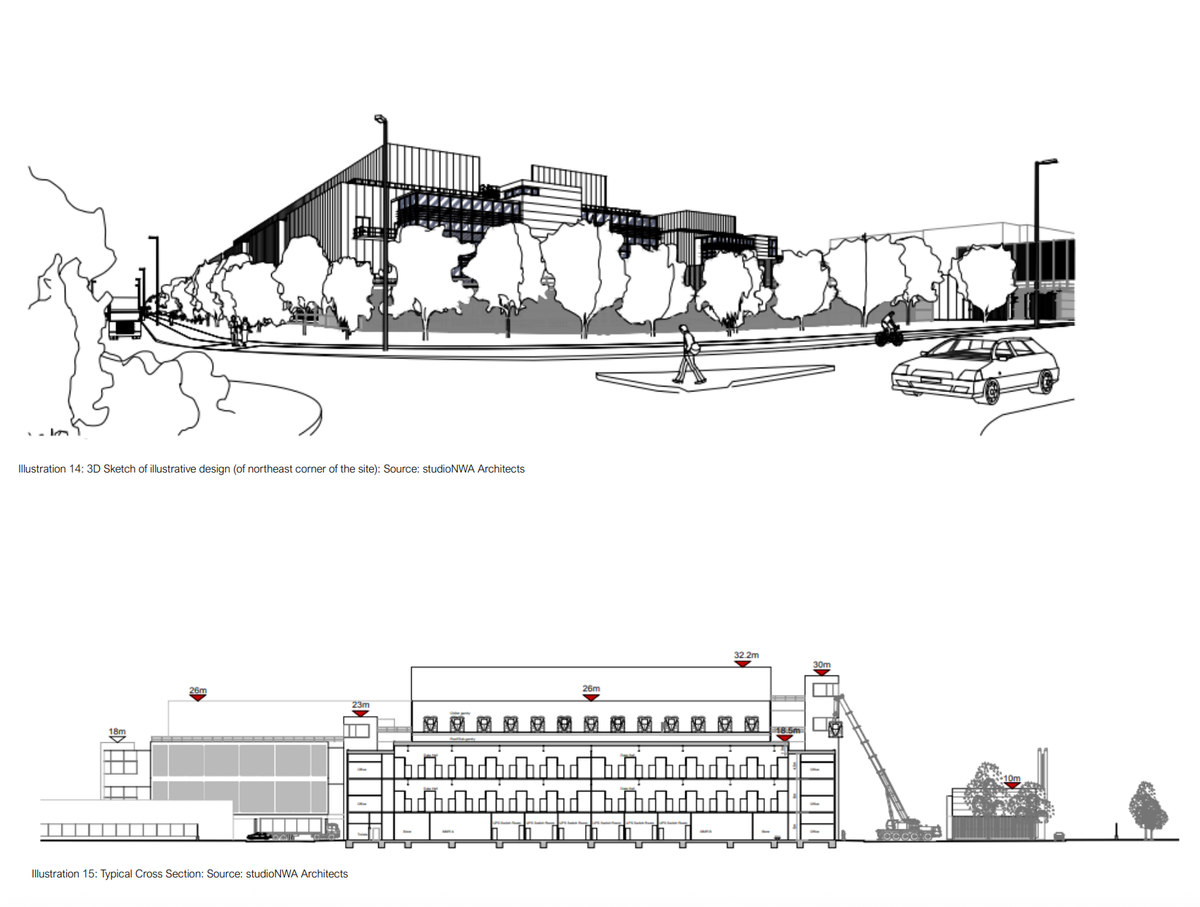
The compound will feature 32m-high buildings, a 24-hour security lodge, fencing and CCTV. The site will also contain back-up generators that could run on diesel or gas (more on that later) and they will be run regularly to ensure a continual energy supply if the national grid goes down.
Equivalent to another airport
In fact, it has been reported that Shelborn has estimated its ‘green’ data centre will produce 200,000 tons of C02 emissions every year, equivalent to Edinburgh Airport. (The term ‘green data centre’ is referenced in the National Planning Framework 4, but there is no clear definition for what that means.)
Yet the council planning department has decided that Shelborn does not need to submit an Environmental Impact Assessment (EIA). The council first decided this in 2022, then again reviewed its decision in December 2025, stating that “no significant environmental effects are likely”. The decision comes down to a fairly simple check-box form, required by an outdated 2017 law called the Town and Country Planning Regulation.
During this council review, there was no renewed opportunity for members of the public to comment on the application via the planning portal. And we still don’t know if the back-up generators will run on gas or diesel. In the air quality assessment report, it says, “final details of the back-up generators are unknown” and does not need to be disclosed before planning permission is granted: it will come at the Approval of Matters Specified in Conditions (AMSC) stage. Incidentally, the site plan shows the two generator compounds will be metres away from the new “public park” and the “active travel route” that Shelborn proposes to create on-site. Would you want to take your children to that park, regularly overshadowed by the burning of raw fuels? It will also be across the road from Busy Bees nursery, and the nursery was not included in the list of “neighbours” that were notified.
Only 39 full-time jobs
Shelborn has estimated the development will create 1,000 jobs. Most of those jobs will be during construction. After that, a skeleton crew is required to maintain a warehouse of data servers. A lawyer for Microsoft said in November that data centres, once operational, “don’t bring a lot of jobs”.
The council’s own department for commercial development and investment estimates the centre will only employ 39 full-time roles.
Besides likely operating on a skeleton crew, data centres have already driven up people’s bills, in the US, Spain and Ireland, among others, due to their massive electricity consumption.
And while Scottish residents are paying sky-high energy bills, AI data centres will pay less. In the so-called ‘AI growth zones’, new government policy means that data centres will pay just £24 per megawatt in Scotland.
Setting a precedent in Scotland
To the committee: the decision you make on 4 February will set a precedent, not just for Edinburgh and other developers watching in the wings – for example, a developer called Apatura wants to build another centre close by, near the canal. Developers want to build centres across the country, too.
In fact, the National Grid estimates that Scotland will host 20% of future data centres, due to our availability of land, water and a more temperate climate.
Other cities – like Dublin – have introduced a moratorium on these centres after witnessing the devastating effects on their water supply, rural landscapes and energy bills. (Shelborn’s data site is not on the green belt, or in a rural location, but at least 100 trees will still be cut down at the site.)
As journalists, we are trained to seek facts and to be wary of corporate spin, whether about ‘green’ credentials or the number of jobs. Councillors need to do the same – and not blindly accept the recommendation of planning officers.
The applicants for this proposal have declined to comment on this letter.
Kind regards,
- The council’s development management sub-committee will vote on Wednesday 4 February. See the plans here and see the meeting agenda and webcast link here.
- Thanks again to Rachael Revesz for sharing this with the Minute. To reiterate, the developer was approached for comment and given a chance to respond but declined.
- A few people have asked what action they can take. Whether for or against the plans, you can write to councillors on the committee here. And you can also attend an event about Edinburgh's planned data centres, chaired by Rachael, on 5 March, hosted by Scotland's countryside charity APRS.